For news executives scrambling to respond to the pressures on audience numbers and revenues, the findings of the 2008 Newsroom Barometer should be encouraging – or alarming. At first glance, editors seem to agree with analysts that future growth depends on investment.
For editors, the top concerns were people. In the survey, 35% said training journalists in new media skills would be their top priority if they were given resources to invest in editorial quality. The second most common concern was recruiting more journalists, which was chosen by 31 % of editors.
Of course, future success will not come about simply because more journalists are making more stuff, because value doesn’t simply depend on quality or even the availability. It also depends on scarcity.
Consider this example from the headline news: Clean water is important, but where it’s plentiful, it’s not considered very valuable. But, as the aid workers in Burma will tell you, the cyclone has left large swathes of the country under water – salt water – and clean drinking water is scarce and, therefore, very valuable indeed. Not surprisingly, much of the energy and relief money will be spend on just that.
Determining what is scarce in the news and information marketplace – and therefore, potentially, valuable is the first step towards growth for the industry. And that takes investment not only in growing skills of the journalists, but in the building the knowledge of those who manage the business and lead the teams.
Of course, the Newsroom Barometer question was hypothetical (editors where asked what they would do if … ) . Between the newsroom and the market are the business managers. And, for many of them, margins are still all.
But, as Deutche Bank analyst Paul Ginocchio said recently publishers make a mistake by thinking that the market cares more about margins than profit growth. "I think the market knows now that you can’t cut your way to profitability…It’s not a cost issue, it’s a revenue issue. Growth takes investment." Strategic investment (I've argued before) should prioritise building the knowledge required to make better, faster decisions, along with the skills & technologies to do things better, faster.
The global survey gathered the answers of 713 editors and senior news executives from 120 countries, and was conducted online in March 2008 by Zogby International and commissioned by the World Editors Forum and Reuters.
Other highlights:
- 86% believe integrated print and online newsrooms will become the norm, and 83% believe journalists will be expected to be able to produce content for all media within five years.
- Two-thirds believe some editorial functions will be outsourced, despite frequent newsroom opposition to the practice.
- The largest group – 44% – believe on-line will be the most common platform for reading news in the future, compared with 41% last year, while 31% cited print (down from 35%last year), 12% mobile and 7% e-paper. The rest were unsure.
Also see: Reports by the Editors Weblog , Journalism.co.uk , the Guardian, Hold the Front Page , The Geek and Reuters (video).
Wednesday, May 07, 2008


Friday, April 25, 2008
Investing in the news media ain't for sissies
The news business ain’t for sissies.
‘It was always so,’ I can hear the hacks (and former hacks) mutter. Indeed. But these days it doesn’t only take guts to make it in the newsroom, it also takes nerve to be in the boardroom – and on the trading floor.
Technological changes and challenges that have been rocking the newspaper industry and reshaping its culture for a decade and more have combined with increasingly dire financial prognoses. In the United States, an industry whose health has been declining for years got sicker still in 2007, with circulation, advertising revenues, and profit margins all falling – and, in a spreading number of markets, taking staff size down with them; one newsroom executive ordered to plan another round of cuts described the situation as “past bleeding – we’re into amputation now”.
In Britain, the picture hasn’t been that gloomy – until recently. Consider, for example, that in 2006 profits still flowed like ink at regional newspaper giant Johnston Press, long considered the best performing amongst its peers. The picture looked rather different in 2007 and, given the general economic gloom, the forecast for 2008 isn’t any better.
Perhaps it’s not surprising that analysts at Deutche Bank and elsewhere are yelling ‘sell’ and the share prices for news media companies seem to have gone into freefall. Share prices for Johnston ( JPR ), Trinity Mirror (TNI ) and Daily Mail & General Trust, which includes Northcliffe Media ( DMGT ), have more-or-less halved over the past year. And things aren’t much better for the largest regional news group in the UK, Newsquest, owned by US-based Gannett, whose share price (GCI) closed at $27,.93 yesterday (24/04/08), down from $56.73 exactly a year ago.
So, what’s going wrong? And, perhaps more critically, what can we do about it?
That’s the focus of the 9th Journalism Leaders Forum on 29 April and a theme I’ll continue to explore this summer, thanks to some funding from the Centre for Research-Informed Teaching at the University of Central Lancashire where I work.
The issue is complex and answers aren’t likely to be simple (and comments, suggestions would be very much appreciated). Yes, the much-discussed trio of changes in technology, economy and demographics have indeed played a part. But I’d suggest that, as the folks at AA will tell you, the first step to recovery is looking in the mirror and ‘fessing up.
Sam Zell, the US real estate magnate who bought the Tribune Company and took it private late last year, thinks that too.
Speaking at an Inland Press Association meeting (reported by Martha Stone in the Shaping the Future of the Newspaper report 7.3), Zell said, “I think the newspaper industry has stood there and watched while other media enterprises have taken our bacon and run with it...It’s too much complacency… [The industry has been] standing there and letting this happen while Rome is burning.”
Of course, that’s not entirely true. Some folks have fiddled a bit (see Mark Andressen’s NYT ‘Deathwatch’ ), but others (most notably companies outside of the US, such as Nordjyke Medier in Denmark) got cracking and are coining it.
Deutche Bank senior analyst Paul Ginnocchio suggests that is't not only about what media executives are doing that is a problem - there's also things they should STOP doing. When Martha Stone asked him, "What are some of the most common mistakes publishers make that diminish their business in the eyes of analysts?," he replied:
"It's focus more on margins than revenue growth.
For a long time they thought Wall Street was focussed on margins. But Wall Street cares about profit growth, not margin expansion. I think the market know now that you can't cut your way to profitability. It's not a cost issue, it's a revenue issue.
Growth takes investment. [emphasis added]"
Investing in the news media during a downturn! Now that certainly aint' a job for sissies.
‘It was always so,’ I can hear the hacks (and former hacks) mutter. Indeed. But these days it doesn’t only take guts to make it in the newsroom, it also takes nerve to be in the boardroom – and on the trading floor.
Technological changes and challenges that have been rocking the newspaper industry and reshaping its culture for a decade and more have combined with increasingly dire financial prognoses. In the United States, an industry whose health has been declining for years got sicker still in 2007, with circulation, advertising revenues, and profit margins all falling – and, in a spreading number of markets, taking staff size down with them; one newsroom executive ordered to plan another round of cuts described the situation as “past bleeding – we’re into amputation now”.
In Britain, the picture hasn’t been that gloomy – until recently. Consider, for example, that in 2006 profits still flowed like ink at regional newspaper giant Johnston Press, long considered the best performing amongst its peers. The picture looked rather different in 2007 and, given the general economic gloom, the forecast for 2008 isn’t any better.
Perhaps it’s not surprising that analysts at Deutche Bank and elsewhere are yelling ‘sell’ and the share prices for news media companies seem to have gone into freefall. Share prices for Johnston ( JPR ), Trinity Mirror (TNI ) and Daily Mail & General Trust, which includes Northcliffe Media ( DMGT ), have more-or-less halved over the past year. And things aren’t much better for the largest regional news group in the UK, Newsquest, owned by US-based Gannett, whose share price (GCI) closed at $27,.93 yesterday (24/04/08), down from $56.73 exactly a year ago.
So, what’s going wrong? And, perhaps more critically, what can we do about it?
That’s the focus of the 9th Journalism Leaders Forum on 29 April and a theme I’ll continue to explore this summer, thanks to some funding from the Centre for Research-Informed Teaching at the University of Central Lancashire where I work.
The issue is complex and answers aren’t likely to be simple (and comments, suggestions would be very much appreciated). Yes, the much-discussed trio of changes in technology, economy and demographics have indeed played a part. But I’d suggest that, as the folks at AA will tell you, the first step to recovery is looking in the mirror and ‘fessing up.
Sam Zell, the US real estate magnate who bought the Tribune Company and took it private late last year, thinks that too.
Speaking at an Inland Press Association meeting (reported by Martha Stone in the Shaping the Future of the Newspaper report 7.3), Zell said, “I think the newspaper industry has stood there and watched while other media enterprises have taken our bacon and run with it...It’s too much complacency… [The industry has been] standing there and letting this happen while Rome is burning.”
Of course, that’s not entirely true. Some folks have fiddled a bit (see Mark Andressen’s NYT ‘Deathwatch’ ), but others (most notably companies outside of the US, such as Nordjyke Medier in Denmark) got cracking and are coining it.
Deutche Bank senior analyst Paul Ginnocchio suggests that is't not only about what media executives are doing that is a problem - there's also things they should STOP doing. When Martha Stone asked him, "What are some of the most common mistakes publishers make that diminish their business in the eyes of analysts?," he replied:
"It's focus more on margins than revenue growth.
For a long time they thought Wall Street was focussed on margins. But Wall Street cares about profit growth, not margin expansion. I think the market know now that you can't cut your way to profitability. It's not a cost issue, it's a revenue issue.
Growth takes investment. [emphasis added]"
Investing in the news media during a downturn! Now that certainly aint' a job for sissies.
Friday, March 14, 2008
Key Journalism Leaders Programme Dates for 2008-9
The 2008-9 academic year is already shaping up to be a busy one for the Journalism Leaders Programme team.
Along with reviewing applications to our postgraduate courses (certificate, diploma and MA), we're also scheduling a raft of bespoke training solutions for media companies in Europe and further afield. And, yes, we're also planning more open events, including the 10th Journalism Leaders Forum, which is slated for 14th October 2008. Some other key dates are below.
Of course, if you'd like more information about any of our activities, don't hesitate to get in touch with the programme director François Nel at FPNel @ uclan . ac . uk.
KEY DATES for 2008-9
Applications for academic courses are now being reviewed.
AUTUMN
9 12 September - Deadline for Late Enrolment
22 Sept-28 Nov - Autumn Block
13-17 6-10 October - Autumn Residential in Preston
14 7 October - 10th Journalism Leaders Forum
& Digital Editors Network workshops
WINTER
12 Jan-20 March - Winter Block
2-6 Feb - Winter Residential in Preston
3 Feb - 11th Journalism Leaders Forum &
Digital Editors Network
SPRING
20 April- 26 June - Spring Block
11-15 May - Spring Residential in Preston
12 May - 12th Journalism Leaders Forum &
Digital Editors Network workshops
Along with reviewing applications to our postgraduate courses (certificate, diploma and MA), we're also scheduling a raft of bespoke training solutions for media companies in Europe and further afield. And, yes, we're also planning more open events, including the 10th Journalism Leaders Forum, which is slated for 14th October 2008. Some other key dates are below.
Of course, if you'd like more information about any of our activities, don't hesitate to get in touch with the programme director François Nel at FPNel @ uclan . ac . uk.
KEY DATES for 2008-9
Applications for academic courses are now being reviewed.
AUTUMN
9 12 September - Deadline for Late Enrolment
22 Sept-28 Nov - Autumn Block
13-17 6-10 October - Autumn Residential in Preston
14 7 October - 10th Journalism Leaders Forum
& Digital Editors Network workshops
WINTER
12 Jan-20 March - Winter Block
2-6 Feb - Winter Residential in Preston
3 Feb - 11th Journalism Leaders Forum &
Digital Editors Network
SPRING
20 April- 26 June - Spring Block
11-15 May - Spring Residential in Preston
12 May - 12th Journalism Leaders Forum &
Digital Editors Network workshops
Thursday, September 20, 2007
New editorial leadership programme for Trinity Mirror
 Trinity Mirror Regional have chosen our Journalism Leaders Programme to spearhead their editorial leadership training and development over the next year. The tailored TM Editorial Leaders Programme will replace Today's Editor, their in-house course for senior editorial staff.
 In an interview with the Press Gazette Neil Benson, TM Regionals editorial director (right), said, "We are delighted to be teaming up with UCLan, who have an excellent pedigree and a highly innovative and interactive approach."
More in the UK trade press at Journalism.co.uk and Hold the Front Page.
Together with the editorial development work we do for Johnston Press, we now provide key digital training and direction for the two largest regional newspaper groups in the UK. Other partners include the Guardian Media Group, Cumbria Newspapers and Johnnic Communication in South Africa.
Tuesday, March 20, 2007
Dive into digital exposes need for modern skills
This piece first appeared in the Press Gazette's journalism training supplement:
NEL, FRANÇOIS (2006) “Dive into digital exposes need for modern skills” Press Gazette, Journalism Training 2006, pp.12-14, 27 October 2006.
Once suspicious, even hostile towards the Internet, most mainstream media groups are now diving into digital. But it’s not only the industry attitude towards technology that is getting a rethink. Demand for new skills and fresh approaches have news organisations reconsidering their stance on staff development, too.
Time was when a reporter with aspirations for the top job was expected to pick up most, if not all, that was required for promotion by being resourceful and imitating those further up the ladder. In a pinch, a working hack would be sent off for few days to pick up this or that new production skill. Or, perhaps, to brush up on the latest in media law.
“There is no tradition of mid-career training in British print journalism,” Prof Hugh Stephenson of City University noted in his 2003 report for the European Journalism Centre. “Indeed, the national newspapers have in the past not been involved in serious journalism training of any kind, relying instead on being able to recruit experienced journalists from regional newspapers.”
Thus it was that editors were apprenticed and, once appointed, seldom entertained hints that there might be more to learn – especially not from outside the fraternity. While most industries came to see investment in staff development as a norm, turning MBAs into a must-have for executives and phrases such as ‘our people are our most important asset’ into clichés, journalism relied on a cliché of its own - the School of Hard Knocks.
The result: “The journalism side of media organisations are managed by people with less formal training for the task that they are expected to perform than would be found in any other comparable activity,” said Stephenson. His observations were confirmed in a study of 148 senior newsroom staff that University of Central Lancashire colleagues and I conducted last year: a small minority of respondents - four per cent – reported having any formal postgraduate qualification in management and more than 40 percent said they had had no management training at all. Indications are that is changing.
Yes, editors still like to reminisce about the days when reading newspapers was a national habit and profits flowed like ink. And, yes, some still lament the oft-repeated trio of demographic, economic and technological forces that is pushing down circulations and endangering newspapers as a vehicle for journalism.
But increasingly editors also appreciate that fending off profit-hungry investors by focussing with efficiencies - slashing expenses and firing staff – has limits. Even if they haven’t read Philip Meyer’s book, “The Vanishing Newspaper: Saving Journalism in the Digital Age,” many have heard of the University of North Carolina professor’s calculation that, at the current rate of decline, the last American newspaper reader will recycle his final paper copy in April 2040. Even those who dismiss Meyer’s premise as fear-mongering have a niggling sense that where there is smoke, there may just be fire.
Many news executives now also concede (in private, if not in public) to what Tim Porter, the associate director of the Knight Foundation-sponsored project, Tomorrow’s Workforce, calls the “unpleasant truth”: journalists - and their managers – need to share responsibility for the decline in readership and relevance of newspapers.
Why is that?
Writing in a recent edition of the Harvard University Nieman Reports, Porter doesn’t mince his words: “Risk-averse newsrooms have spent several decades with their collective heads in the ink barrel, ignoring the changing society around them, refusing to embrace new technologies, and defensively adhering to both a rigid internal hierarchy and an inflexible definition of “news” that produces a stenographic form of journalism, one that has stood still, frozen by homage to tradition, while the world has moved on.”
'Risk-averse newsrooms have spent several decades with their collective heads in the ink barrel'
Having raised their heads and come clean, media executives are now primed for change. The Big Question: “Where to from here?” Alert to the knowledge cul-de-sacs in their own organisations, they’ve gone looking for answers - and talent – elsewhere. Some have raided from old rivals - the Telegraph lured their new media director Annelies van den Belt from News International; others have hunted further afield - Johnston Press found their digital director Alex Green at the Virgin Group.
Parachuting in key expertise to help develop strategy is understandable, often essential. But it is only a part solution. The key challenge facing the industry is not simply the ability to conjure up a new multimedia formula to replace the old print ones. It’s not even to update the technologies and adapt to new work practices. It is changing the newsroom mindset. Just ask Ulrik Haagerup.
The editor-in-chief of the Nordjsyke Medier in Denmark, Haagerup was a key player in the unremarkable regional newspaper group’s transformation into a world leader of media convergence. From a single newsroom, Nordjyske Medier now tell news stories through a website, a radio station, television channel, digital notice boards, mobile phone alerts, a free commuter paper and, yes, a daily newspaper. And they’re doing it with the same number of editorial staff – and mostly the same people – that they had to start off with. In the process, they’ve reversed declining market share, re-energised the workforce, and advertising revenues are up 33 per cent from 2002 to 2005.
Not surprisingly, Haagerup and other NM colleagues are in wide demand internationally as speakers and their newsroom has seen a steady march of visitors – foreign newspaper bosses and academics (including our team at UCLan) keen to see how the Scandinavians have done it.
Some, like the Daily Telegraph, are said to have used NM’s hub-and-spoke newsroom as a blueprint for the design of their own new offices. Though it’s still way too early to judge - especially from the outside – reports suggest that the Telegraph’s implementation is especially, perhaps even needlessly, messy. Writing in the Media Guardian, former Daily Telegraph foreign correspondent and recent Harvard Business School graduate Philip Delves Broughton put it down to one thing: internal mismanagement. If that is true, it would not be surprising. And it would confirm the relevance of the advice Haagerup repeats like a mantra when asked about the key to his organisation’s success: “This is about people, it’s not about technology, it’s not about organisational charts, it’s not about money - it’s about people.” And, for that reason, staff development - ongoing and comprehensive – is non negotiable, says Haagerup.
Perhaps it’s not surprising that Haagerup is bullish about learning; after all, five years after completing his undergraduate degree in journalism he headed off to spend a year at Stanford Business School. However, it would be wrong to dismiss his comments as opinion grounded in the experiences of a single, exceptional individual. Amongst Danish journalists, Haagerup’s attitude and even his educational background is not unique.
Unlike in the UK, there has been long and strong tradition of staff development in Denmark following a 1979 agreement between the Danish Newspaper Publishers Association and the Danish Journalists Union that all journalists should have one week’s paid training leave a year, which may be accumulated for up to six years.
Yes, the British experience is very different. But the investment by Johnston Press, Cumbrian Newspapers and the Guardian Media Group in courses such as those offered by the Journalism Leaders Programme is one indication things are changing. News organisations have come to realise that to survive in this era of heady change and intense competition, investment in talent is essential. Those that aim to thrive are training their journalists. They are developing their managers. They are learning as institutions. Together they are discovering that change is a thrilling phenomenon – and learning is the oxygen for growth.
- For more from Tim Porter see this recording of the 4th Journalism Leaders Forum. There's a short and powerful interview with Ulrik Haagerup and colleagues here.
- To join in the 6th Jounalism Leaders Forum on 15 May 2007 see the latest details.
- To join the recently-established Digital Editors' Network, get hold of the initiator Nick Turner of Cumbrian Newspaper via the blog.
- If you, like The Indepedent editor Simon Kelner or The Sun managing editor Graham Dudman, you graduated from a journalism programme at Preston, link into our alumni network and you'll get information about the series of special events planned to mark our 45th anniversay over the course of the 2007-8 academic year. Yes, we've been leading journalism education in England since 1962.
- To join in the 6th Jounalism Leaders Forum on 15 May 2007 see the latest details.
- To join the recently-established Digital Editors' Network, get hold of the initiator Nick Turner of Cumbrian Newspaper via the blog.
- If you, like The Indepedent editor Simon Kelner or The Sun managing editor Graham Dudman, you graduated from a journalism programme at Preston, link into our alumni network and you'll get information about the series of special events planned to mark our 45th anniversay over the course of the 2007-8 academic year. Yes, we've been leading journalism education in England since 1962.
Monday, August 21, 2006
Discuss the challenges of leading innovation with 'the most powerful figure in Britain's regional newspaper industry'
The Independent's Raymond Snoddy wrote this today on Johnston Press chief executive Tim Bowdler:
The most powerful figure in Britain's £3bn regional newspaper industry is neither the flaxen-haired Sly Bailey of Trinity Mirror nor the curly-topped ruler of the Harmsworth press dynasty, Viscount Rothermere, but an engineer with a track record in companies that make everything from ball bearings to milk floats....
In this age of ever-increasing competition from the electronic media, Johnston, a company whose origins go back to a Falkirk printing business in 1767, still delivers hefty profit margins to its shareholders of about 35 per cent...
Snoddy’s profile of Bowdler also includes a discussion about the Johnston’s strategic partnership with the Department of Journalism in Preston, which is the hub of the company's digital innovation.
To hear more from Bowdler on the challenges of leading journalism in an digital age, join the next Journalism Leaders Forum on October 17th. Why don't you join the free global discussion in person or online?
The open forum is scheduled as part of the autumn residential week activities for participants in the Journalism Leaders Programme courses. Applications for The Principles of Journalism Leadership: Strategies for a Digital Age, which is being offered this autumn, are still being accepted. Visit the programme website or contact the director, François Nel at leaders[at]ukjournalism.org for more details.
Thursday, June 29, 2006
Journalism Leaders team help Johnston Press (UK) move to multimedia
In a presentation to the City yesterday, Johnston Press (UK) went public about their efforts to convert 70 traditional newsrooms into multimedia operations, starting with the Lancashire Evening Post in Preston.
Their key partner? The Department of Journalism team at UCLan.
Department head Mike Ward, author of Journalism Online and an initiator of the Journalism Leaders Programme, coordinated the team who advised on Johnston's strategy and helped refine the planning for implementation – and who continue to provide management and skills training.
Research in this area also continues with the Johnston Press Chair in Digital Journalism Development (described by Les Hinton, executive chairman of News International and a Johnston Press director, as "one the most sensible corporate investments I have seen for a long time.")
Others worldwide who also want to build the capacity - and confidence - to lead journalism in a digital age can participate in our flexible and highly-rated Journalism Leaders Programme, which is currently accepting applications for the next block. More details are available on our website .
Wednesday, February 22, 2006
First Journalism Leaders Programme residential gets enthusiastic 'thumbs up'
The verdict was unanimous: The first residential week of the new Journalism Leaders Programme was a great success.
 An analysis of questionnaires to participants- who joined the professional development course from news organisations in Africa, Asia and Europe - shows that everyone was ‘very satisfied’ or ‘satisfied’ with the overall experience. The key to that, according to participants, was relevant content and stimulating discussions with colleagues and presenters.
“Great variety. Huge thought gone into it. Excellent presenters,” wrote one respondent when asked what they liked most about the experience. “Discussions, sharing of experiences and ideas,” wrote another. “Leaving on a high. Privilege to attend,” noted a third.
Presenters, too, gave the programme a ‘thumbs up’. “Very lively and stimulating!” is how one discussion leader described the week, which included extensive discussion of a specially-commissioned case study on convergence at Nordjyke Medier in Denmark.
The on-campus residential week formed part of the first module of the course, which is offers modules in three 10-week blocks and blends face-to-face sessions with extensive online discussion and support.
In addition to the core faculty, participants also heard from:
Applications for the September 2006 intake are currently being accepted. Visit the course website or contact course leader François Nel at FPNel@uclan.ac.uk for more information.
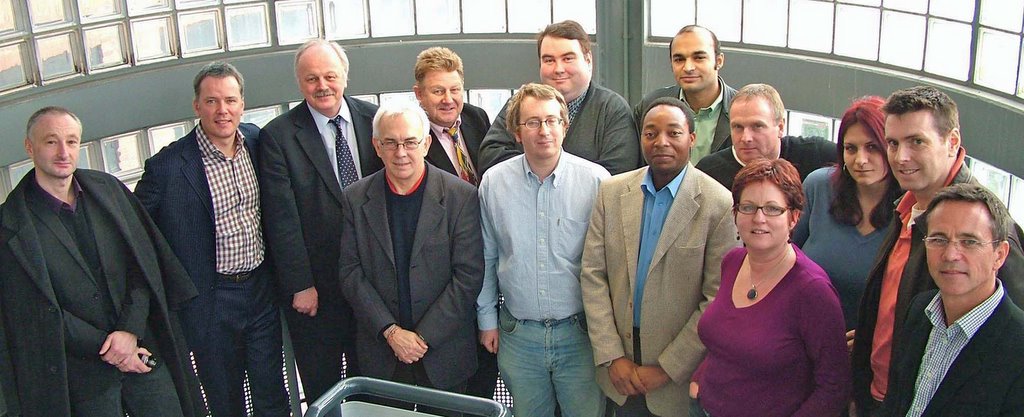 An analysis of questionnaires to participants- who joined the professional development course from news organisations in Africa, Asia and Europe - shows that everyone was ‘very satisfied’ or ‘satisfied’ with the overall experience. The key to that, according to participants, was relevant content and stimulating discussions with colleagues and presenters.
“Great variety. Huge thought gone into it. Excellent presenters,” wrote one respondent when asked what they liked most about the experience. “Discussions, sharing of experiences and ideas,” wrote another. “Leaving on a high. Privilege to attend,” noted a third.
Presenters, too, gave the programme a ‘thumbs up’. “Very lively and stimulating!” is how one discussion leader described the week, which included extensive discussion of a specially-commissioned case study on convergence at Nordjyke Medier in Denmark.
The on-campus residential week formed part of the first module of the course, which is offers modules in three 10-week blocks and blends face-to-face sessions with extensive online discussion and support.
In addition to the core faculty, participants also heard from:
- Dan Gillmor, author of We the Media. A former US newspaperman, he is one of the web’s leading advocates of grassroots journalism.
- Pete Clifton, Editor of BBC News Interactive, responsible for one of the web’s most successful news sites.
- Cath Hearne, editor of BBC London’s nightly news programme and was at the helm on July 7th, a day in which some of the most vivid images of the London bombings were contributed by members of the public.
- John Fray, Deputy General Secretary of the National Union of Journalists, which represents 35000 journalists in the UK and Ireland.
- And Mike Ward, author of Journalism Online and head of the journalism department at UCLAN.
Applications for the September 2006 intake are currently being accepted. Visit the course website or contact course leader François Nel at FPNel@uclan.ac.uk for more information.
Wednesday, November 02, 2005
Lessons from the front: Convergence at Nordjyske Medier
 Leaders are expected to look around corners, as it were, and to tell us what they see there.
The Journalism Leaders Programme team believe that sometimes the best way to map out a way forward is by looking back – at our own experiences and those of others. That’s why our course includes original, cutting-edge cases that spark lively discussions and provide lessons that participants can put into practice in their professional lives.
A key case for the Principles of Journalism module, which is offered this January, looks at the Danish company Nordjyske Medier. Described by Martha Stone of Ifra/Newsplex as the best example of a converged media organisation in the world, the group's leadership decided in 2001 to stop talking about the challenges of a digitial age. Instead, they set out to transform an unremarkable regional newspaper into a multimedia organisation that produces radio, TV, online and print media from a single converged newsroom.
We wanted to find out more about what they were doing, how they'd gone about it - and what they'd learned in the process.
 So, late this summer John Drury, a Sony Award-winning TV producer who teaches in our department, headed off to North Jutland. John spent two days at Nordjyske Medier taping interviews with managing director Per Lyngby and a variety of other role players from across the organisational chart. We’ve analysed the company data, compared it to other research and pulled together a case with valuable insights for those who are keen – and courageous enough – to lead journalism in the Digital Age.
You can watch* a short preview of the video case study HERE.
Of course, we are most interested in knowing what you think. So please post your comments here or send them to leaders@ukjournalism.org.
Online applications are currently being processed for the Winter 2005-6 intake to the innovative Journalism Leaders Programme offered by the University of Central Lancashire's Department of Journalism. François Nel, the programme course leader, is happy to answer any questions: FPNel@uclan.ac.uk.
* These videos require Real Player software, which can be downloaded for free here.
Thursday, July 14, 2005
Researching the training needs of editors
Guy Berger , professor of journalism at Rhodes University, has been working on ways to help editors do better for some time now. His 1998 research paper, with Peter du Toit, “Exploring training needs of editors in the countries of Southern African Development Community (SADC)” still warrants a look-see (follow links to research>leadership).
More recently, the South African National Editors Forum (Sanef) published the results of a commissioned study, “Managerial competencies among first-line news managers in South Africa's mainstream media newsrooms” , which included both qualitative and quantitative approaches and a very well-constructed sample.
To help inform the Journalism Leaders Programme at UCLan, we did a little bit of research ourselves. While I’m still working on a conference paper that will report the full results, there’re a few tidbits in a piece on our website and in another one that ran in the UK Press Gazette .
More recently, the South African National Editors Forum (Sanef) published the results of a commissioned study, “Managerial competencies among first-line news managers in South Africa's mainstream media newsrooms” , which included both qualitative and quantitative approaches and a very well-constructed sample.
To help inform the Journalism Leaders Programme at UCLan, we did a little bit of research ourselves. While I’m still working on a conference paper that will report the full results, there’re a few tidbits in a piece on our website and in another one that ran in the UK Press Gazette .
Tuesday, July 12, 2005
What for?
What's this blog for, you ask? Simply this: To gather research and information about journalism leaders for those who care, which are likely to be other researchers, students, journalists - and, perhaps, even those who lead them.
Why? The answer to this one has a few more angles. For one, I lead the new Journalism Leaders Programme at the Lancashire Business School in Preston, UK, and am keen to create a public depository of related research documents, both those that are freely available and those that are access-protected.
Another reason for this effort is that I'm also researching journalism leadership and change to inform our course and my teaching, certainly. But I'm also working on of my doctorate in journalism education at City University, London. In that capacity, I'm also keen to create a network of journalism scholars - or would-be scholars, like me - who are keen to swap ideas.
Like with other forms of journalism, this blog's success depends on the extent to which we all share. So, go ahead, send me a note at leaders@ukjournalism.org and let's get this depository - and discussion - going.
Why? The answer to this one has a few more angles. For one, I lead the new Journalism Leaders Programme at the Lancashire Business School in Preston, UK, and am keen to create a public depository of related research documents, both those that are freely available and those that are access-protected.
Another reason for this effort is that I'm also researching journalism leadership and change to inform our course and my teaching, certainly. But I'm also working on of my doctorate in journalism education at City University, London. In that capacity, I'm also keen to create a network of journalism scholars - or would-be scholars, like me - who are keen to swap ideas.
Like with other forms of journalism, this blog's success depends on the extent to which we all share. So, go ahead, send me a note at leaders@ukjournalism.org and let's get this depository - and discussion - going.
Subscribe to:
Posts (Atom)